Ask most people how they clean a room and they will describe a process that starts wherever catches their eye first — often the floor, the kitchen counter, or whatever looks dirtiest. Professional cleaners follow a different principle entirely: cleaning always moves from high to low, and from dry to wet. Violate this sequence and you will redo work you have already done.
The Core Principle: Top to Bottom, Dry to Wet
Gravity is the fundamental force working against you when you clean. Dust, debris, and cleaning spray residue fall downward. If you vacuum the floor first and then dust the shelves above it, you've wasted the vacuuming — the dust lands exactly where you just cleaned. Professional cleaners work from the highest point in a room downward, ensuring that anything dislodged from above lands on a surface that has not yet been cleaned.
The Correct Sequence for Any Room
- Declutter first. Before any cleaning begins, remove items that don't belong in the room, put away anything out of place, and clear surfaces you intend to clean. Cleaning around obstacles is slower and less effective than cleaning clear surfaces.
- Ceiling and vents. Run a duster along ceiling corners, ceiling fan blades, and any visible vent covers. This is the most neglected step and the one that makes everything else less effective when skipped.
- High shelves and wall art. Dust from top to bottom — highest shelves first, working downward. Use a dry microfiber cloth for electronics and delicate items.
- Furniture surfaces and mid-level areas. Tables, countertops, windowsills, light switches, and door handles. This is where spray cleaning products are applied — but not yet on floors.
- Glass and mirrors. Clean these after dusting but before floors. Glass cleaner over-spray should land on an uncleaned floor, not a freshly mopped one.
- Baseboards. Often missed entirely. A damp cloth along baseboards removes accumulated dust and dramatically improves the visual cleanliness of the room's perimeter.
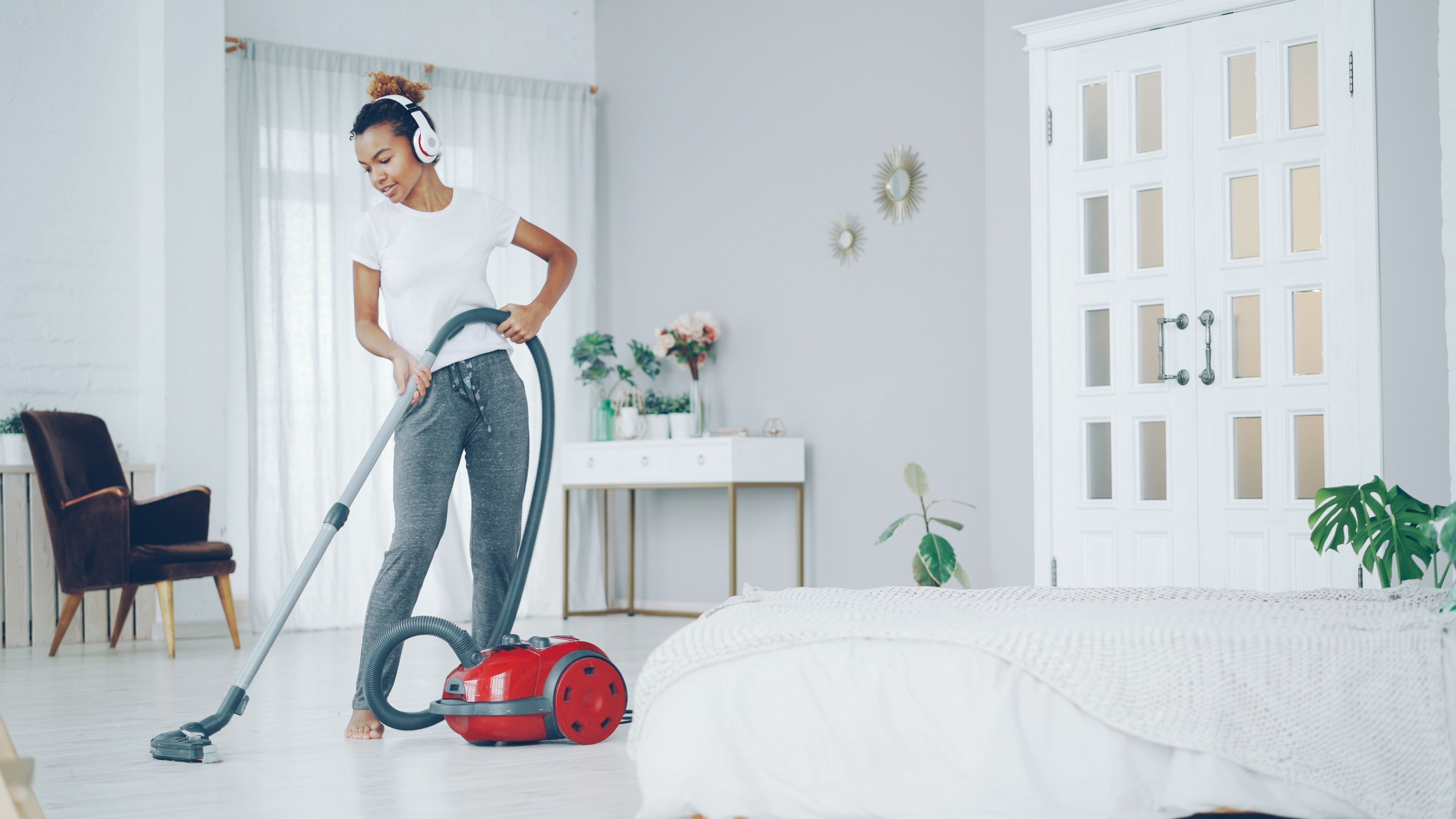
- Vacuuming. Now — after all surface cleaning is complete. Everything that fell during steps 1–6 is now on the floor and ready to be collected in one pass.
- Mopping or floor washing. Always last. Wet floors collect everything, so wet floors should always be the final step.
The professional cleaner's rule: if you are making your floor dirtier while cleaning, you are doing it in the wrong order.
The Time It Saves
Following the correct sequence is not just about quality — it is significantly faster. When you clean in the right order, each step only has to be done once. When you clean out of sequence, you inevitably find yourself re-vacuuming, re-wiping, or re-mopping areas you already addressed. In a medium-sized room, the correct sequence saves 10–15 minutes per cleaning session through eliminated rework alone.
Room-Specific Notes
In bathrooms, always clean the toilet last among bathroom fixtures — after the sink, mirror, and shower — to avoid cross-contamination. In kitchens, clean the stovetop before the counters, as stovetop cleaning often disperses grease particles. In bedrooms, strip and remake the bed after dusting but before vacuuming, so any debris from the bedding gets collected in the floor pass.