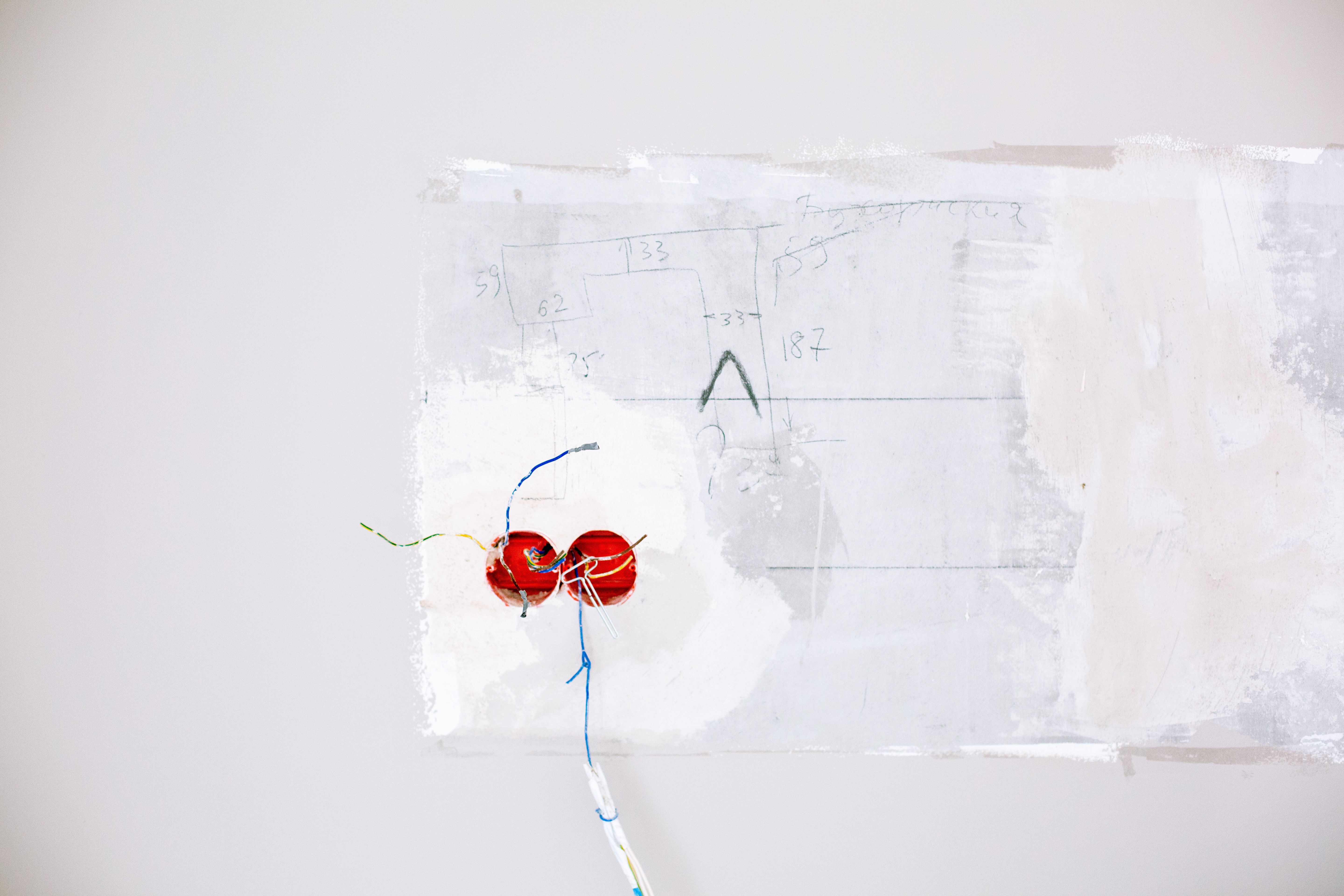
Visible drywall patches are almost always the result of one of three mistakes: not feathering the compound far enough out from the patch, applying too many thick coats instead of multiple thin ones, or skipping the texture step before painting. The professional method addresses all three systematically.
Tools and Materials
- Self-adhesive fiberglass mesh patch (for holes up to 6 inches)
- Pre-mixed joint compound (not fast-setting)
- 6-inch and 10-inch drywall knives
- Medium and fine grit sanding block (120 and 220)
- Primer (mandatory)
- Matching paint
The Professional Patch Method
Clean the hole edges of any loose paper or drywall. Apply the self-adhesive mesh patch centered over the hole. Using your 6-inch knife, apply a thin first coat of joint compound, feathering edges out 2 inches beyond the patch perimeter. Let dry completely — typically 24 hours. Sand lightly with 120-grit, removing ridges without removing material.
Second coat: Switch to the 10-inch knife. Apply a thinner coat, feathering edges out to 6 inches. The larger knife automatically creates a more gradual taper. Let dry, sand with 120-grit.
Third coat: Very thin skim coat, feathering out 8–10 inches. After drying, sand with 220-grit until completely smooth and the edge transition is imperceptible.
The difference between a visible patch and an invisible one is always the number of thin coats — not the quality of the first one. Three thin coats beat one thick coat every time.
Texture Matching
For smooth walls, proceed to priming. For textured walls — where most DIY patches fail — match the existing texture before painting. Orange peel texture can be approximated with spray texture held 18–24 inches from the wall. Test your technique on cardboard before applying to the wall.
Primer Before Paint — Always
Joint compound absorbs paint differently than surrounding drywall. Painting directly over an unprimed patch produces a shiny or matte "flash" spot visible from an angle even when the color matches. Apply one coat of drywall primer, let dry, then paint. Two thin coats of paint finish the job.