The inside of a microwave is one of the most neglected surfaces in any kitchen — and one of the fastest to deteriorate. Splatter accumulates in layers, hardens under repeated heat cycles, and eventually becomes a baked-on crust that conventional wiping cannot touch. What most people don't know is that steam does all the work — you do not need to scrub at all if you apply it correctly.
Why Steam Works
Hardened food residue is essentially dehydrated organic material that has bonded to the microwave's interior surface through repeated heating. Introducing moisture and heat simultaneously re-hydrates and loosens that bond. Steam penetrates into the microscopic surface texture in a way that a dry cloth cannot. After steam treatment, residue wipes away with almost zero friction.
The Five-Minute Method
- Fill a microwave-safe bowl with 1 cup of water and squeeze in half a lemon. Drop the spent lemon half into the bowl as well. Lemon is not strictly necessary — it adds a mild antibacterial component and eliminates residual odors, but plain water produces the same cleaning result.
- Microwave on high for 3 minutes. The water should come to a full rolling boil and the interior should fill with steam. Do not open the door immediately — let it sit for an additional 2 minutes. The trapped steam continues to work while it cools slightly, and the waiting period brings the bowl to a safe handling temperature.
- Remove the bowl carefully — it will still be very hot. Use oven mitts or a folded towel.
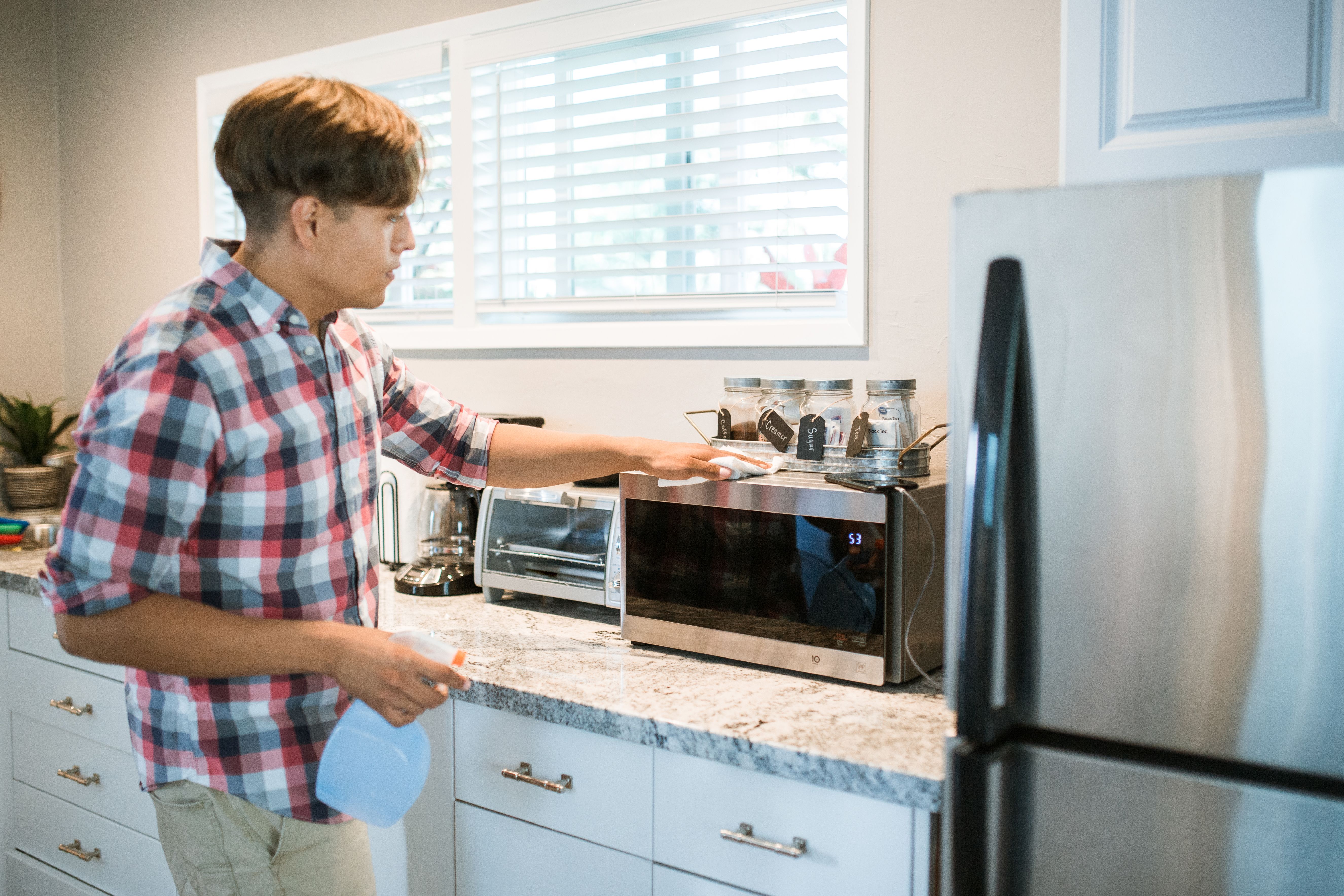
- Remove the turntable plate and wipe it separately. Wipe the interior with a damp microfiber cloth, starting from the top and working downward. All loosened residue will wipe away with minimal pressure.
- Wipe the door seal and exterior. Steam migrates into the door seal area — run the cloth along it to remove any accumulated grime.
The steam does 90% of the work. Your job is simply to wipe away what it has already loosened.
For Particularly Stubborn Buildup
If your microwave has years of accumulated residue, run the steam cycle twice before wiping. After the first steam treatment, wipe what you can, then repeat with a fresh bowl of water. The second steam cycle addresses anything the first loosened but didn't fully release. Even significant buildup responds to two rounds.
Preventing Future Buildup
The real solution to microwave cleaning is prevention: cover food before heating. A simple microwave-safe cover — a vented plastic lid or an inverted microwave-safe plate — stops splatter from reaching the walls in the first place. Cover food for 30 days consistently and you will find that wiping the microwave requires a damp cloth and 60 seconds, nothing more.
The Odor Factor
Microwaves that have cooked fish, reheated strong-smelling foods, or accumulated burnt residue develop persistent odors that steam alone addresses only partially. After the steam clean, place a small bowl of baking soda inside the closed microwave overnight. Baking soda absorbs volatile odor compounds at room temperature without requiring heat. Replace every 30 days during the cooking season and odor becomes a non-issue.