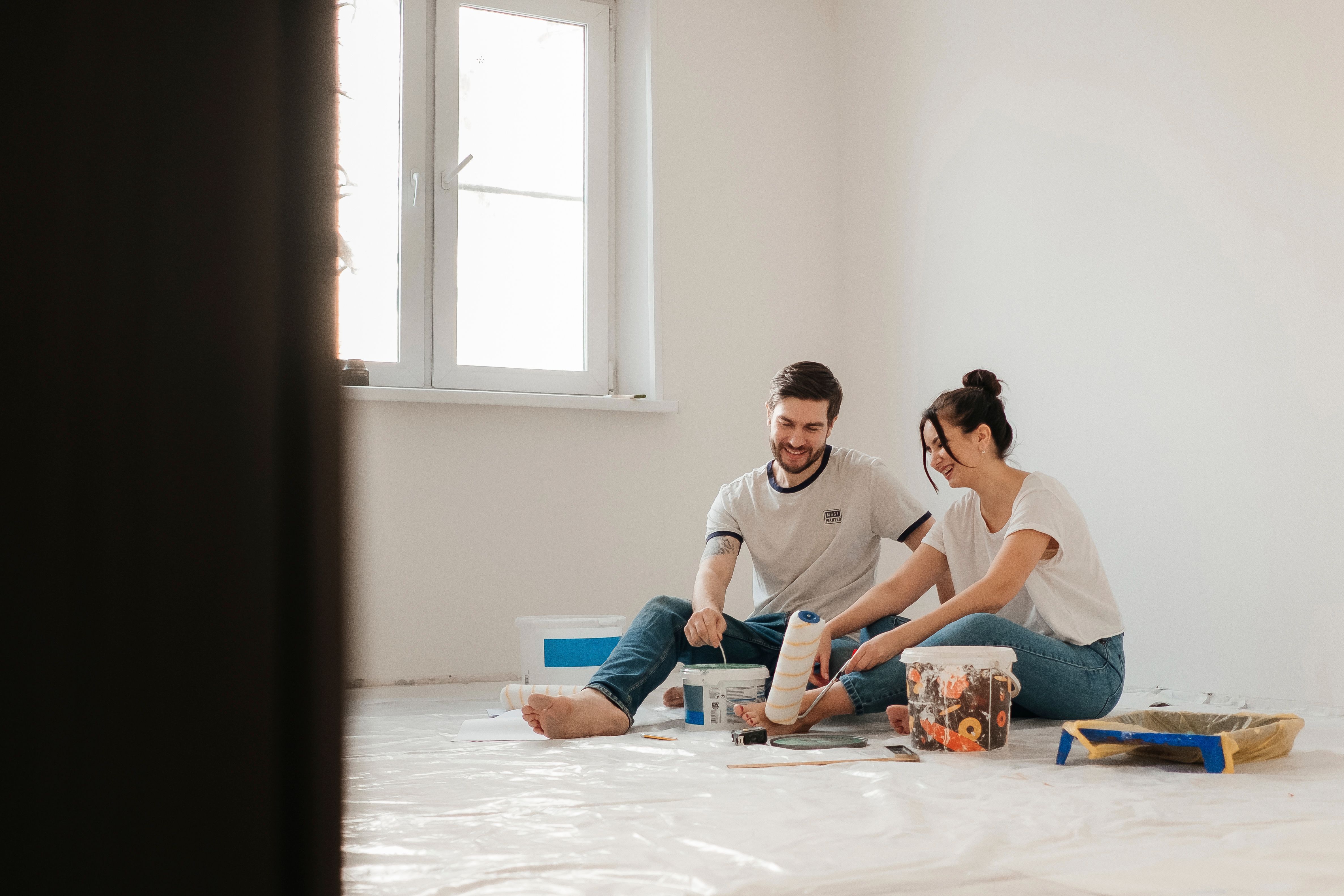
A professional paint job differs from an amateur one in visible, specific ways: crisp edge lines, even sheen, no brush marks, and color that looks correct in both natural and artificial light. None of these results come primarily from painting skill. They come from preparation. Professional painters routinely describe their work as 70% preparation and 30% application.
Step 1: Clean the Walls
Paint does not adhere well to dust, grease, or existing residue. Kitchen walls accumulate a thin film of cooking grease that is invisible but prevents paint adhesion. Wash all surfaces with a TSP substitute solution before painting. Mix according to package directions, wipe down all surfaces, and allow to dry completely — at least 2 hours.
Step 2: Fill Every Imperfection
Paint magnifies surface imperfections. Inspect every wall with a handheld flashlight held at a low angle, casting shadows across the surface. Fill every dent, nail hole, seam, and crack with lightweight spackling compound. Allow to dry, sand flush with 220-grit sandpaper, and dust clean.
Step 3: Prime Properly
Primer is not optional. Prime all patched areas, any bare wood or new drywall, and any dark wall being painted a lighter color. Using paint-and-primer-in-one in one coat on dark walls consistently produces poor results. The separate primer step done correctly requires fewer finish coats and produces better color accuracy.
Professional painters don't paint faster than amateurs. They prepare better. The preparation determines 80% of the final result.
Step 4: Tape Correctly
Press painter's tape firmly with a putty knife to prevent paint bleeding underneath. Remove tape while the paint is still slightly tacky (30–60 minutes after application), pulling at a 45-degree angle away from the painted surface. Removing tape after the paint fully dries tears the paint edge.
Step 5: Cut In Before Rolling
Always paint the edges with a brush before rolling the large surfaces. Paint a 2–3 inch band along all corners, trim edges, and ceiling lines. Then immediately roll the adjacent walls while the cut-in edges are still wet — this wet-edge blending eliminates the visible line between brush and roller work that characterizes amateur paint jobs.